
Make a simple dandelion tincture to help ease indigestion, calm gout symptoms, and more.
A tincture is a concentrated herbal extract made by soaking plant material in alcohol — it’s one of the oldest and most effective ways to preserve and use medicinal herbs.

The flowers are delicious in dandelion fritters and the leaves can be used in salads or cooked as a green.
Dandelion tends to be abundant in most backyards and every part of it is edible and useful on our homesteads. Dandelion tincture is just another way to let nothing go to waste.
Easy to Make
Tinctures are incredibly easy herbal remedies to make. They are nothing more than herbs and vodka left alone to infuse for about a month.
The time is important but requires no work on our part.


Vodka or Everclear?
Roots are a bit tougher than the leafy, green parts of herbs. That tougher quality make it a bit harder to get all the benefit from the roots.
Grain alcohol, like Everclear, is better suited for root tinctures because of their harder consistency.
However, Everclear can be tough to take for many people. The flavor and strength is a bit strong. Vodka will work for most tinctures, dandelion included.
Fresh or Dried Root?
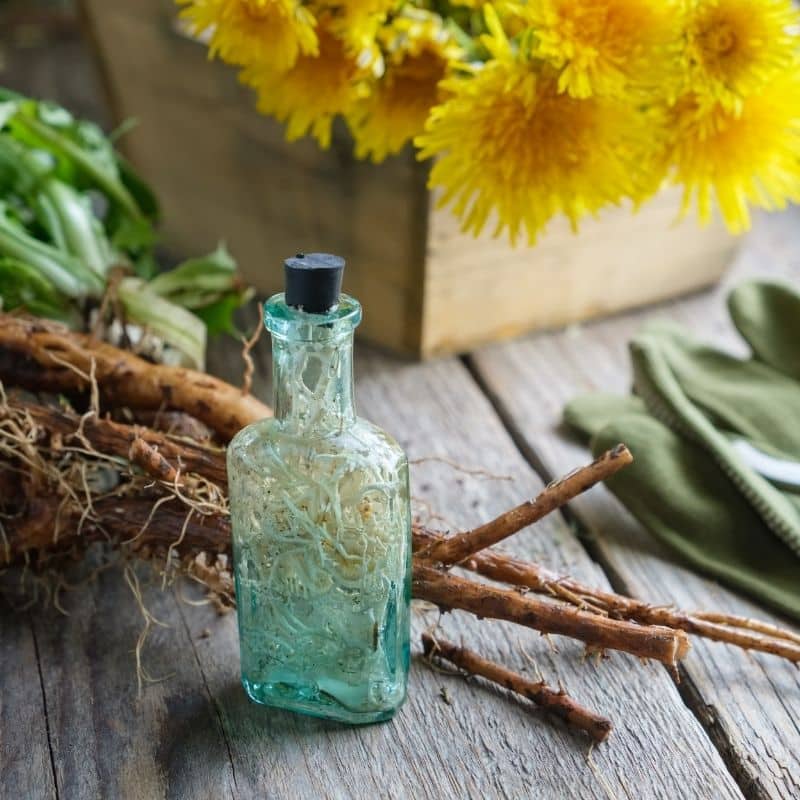
Use fresh dandelion root if you have it from your yard. The best time to harvest dandelion root is in the fall. Simply dig them from the earth as best you can.

Remove the greens from the roots. Scrub the fresh roots well. It will take some doing but it is important to get them clean.
Once clean, let the roots dry at room temperature overnight. Just to let all the surface water evaporate.
Chop the roots and proceed with the recipe.
Use dried and chopped dandelion roots, if fresh aren’t available.
Milky Tincture
Sometimes root tinctures like dandelion will get cloudy or milky in appearance. Don’t be tempted to toss that, thinking it is mold.
Rather that cloudy appearance is actually Inulin – which is a healthy starch and prebiotic.
If your tincture develops inulin, don’t strain it. Rather keep it all and just shake it well before taking so that you also get the benefit of that milky starch.

How to Use Dandelion Tincture
Dandelion root tincture is most commonly used to support liver health, ease indigestion, and help manage gout symptoms. Here’s a simple guide to dosing:
For indigestion — such as overindulging at a big meal — take 10 drops in a small glass of water every hour as needed until you feel relief.
For liver support or gout — take 1 teaspoon in water up to three times a day. Give it at least 2–3 weeks of consistent use before evaluating whether it’s helping, as herbal remedies generally work more gradually than pharmaceutical options.
As a daily tonic — some people take a small dose (1/2 teaspoon) in warm water each morning as a general digestive and liver support. You can sweeten it with a little herbal infused honey to mellow the bitter flavor.
If your tincture has turned cloudy or milky, don’t discard it — that’s inulin, a beneficial prebiotic starch. Simply shake the bottle well before each use so you get the full benefit.
As with any herbal remedy, start with a smaller dose to see how your body responds, and consult your healthcare provider if you’re on medications or managing a chronic condition.
Cautions
Dandelion root is generally well tolerated and safe to use. However, as in all medications be sure to discuss it with your healthcare practitioner.
Pregnant or nursing women should avoid it as there haven’t been enough studies to study side effects.
Dandelion root should be avoided if the gallbladder is inflamed or if there is bile duct blockage.
Of course, avoid if allergic.
Do discuss the tincture with your doctor or pharmacist to avoid any drug interactions with current medications.
Want to learn more about foraging for food & medicine? Our Guide to Backyard Foraging will give you the skills, recipes, and methods to feel confident in gathering medicinal and edible herbs right in your own backyard.
Dandelion Root Tincture
Ingredients
Equipment
Method
- Place the dandelion root in a clean glass jar.
- Fill the jar with vodka, making sure the roots are fully submerged.
- Put a lid on the jar and place in a dark cabinet for about 1 month. Give the jar a shake now and then.
- At the end of a month, strain the roots from the vodka.
- Put the strained tincture into a clean glass jar and label.
- Keep in a dark cabinet.
Nutrition
Tried this recipe?
Let us know how it was!While you’re foraging, be on the lookout for other herbs such as plantain which make great tinctures, salves, and can be used fresh. Here’s a great plantain herb guide for you.

Amazing I can not wait to try this now. I have made Usnea tincture and am confident in my skills to do so. the medicinal benefits of this plant makes me want to for sure make some.